MINI Countryman Electric
The MINI Countryman Electric is a fully imported premium electric SUV priced from Rs 54,90,000 to Rs 66,90,000 ex-showroom, built for buyers who want a distinctive, design-led EV rather than a mainstream badge. All four variants share a 66.45 kWh battery rated at 440-462 km on the WLTP test cycle (MINI has not run it through India's ARAI cycle, and there's no independent real-world test yet), with the highest figure on the front-wheel-drive E variants and a slightly lower one on the quicker dual-motor SE All4.
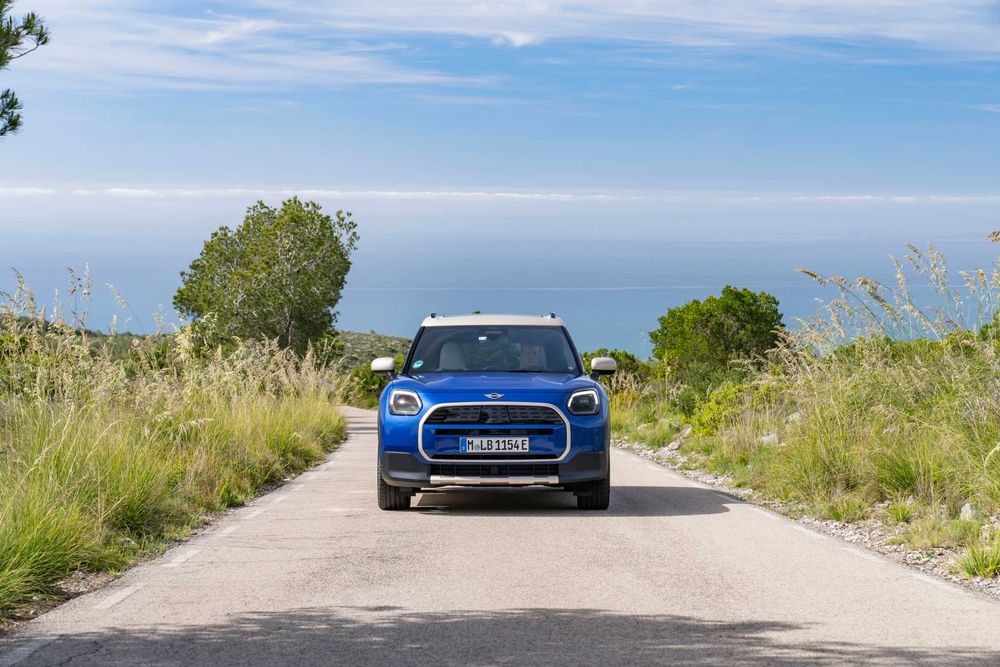
Is the MINI Countryman Electric right for you?
Best for
- Buyers who want a design-forward, characterful EV outside the usual Hyundai/Kia/Tata crowd and are fine paying a CBU import premium for it
- Urban and suburban daily driving with charging at home or work, topping up on 130 kW DC fast chargers when travelling
- Buyers who want Level 2 ADAS in this segment, which the Countryman Electric brings as a first for MINI in India
- Buyers prioritising quick, all-wheel-drive performance over maximum range, via the SE All4's 0-100 kmph in 5.6 seconds
Think twice if
- Buyers who need a certain, ARAI-verified or independently tested real-world range figure - only MINI's own WLTP-claimed numbers exist today
- Value-focused shoppers - CBU import pricing is steep for what is, dimensionally, a compact SUV
- Buyers who need dependable service and charging support outside major metros - MINI's India network is thinner than mainstream EV brands
- Buyers who want all-wheel drive as standard - only the base E variants are offered, all front-wheel drive, single motor; AWD is exclusive to the range-shorter, priciest SE All4
EVz Score: 6.0 / 10 Good
Computed from catalogue data, not opinion, for the Countryman SE All4 (dual motor AWD) variant (the model's best). Range-based components use the claim adjusted by the segment's measured average shortfall, never the raw claim. How the score works.
Available colours
9 exterior colours offered. Swatches are approximate on-screen representations, not official paint codes, and availability can vary by variant.
Variants, specs, on-road price and running cost
Charging: 10-80% in ~29 min on a 130kW DC fast charger; approx 6 hours for a full charge on an 11kW AC charger. Range figure is WLTP (up to 462 km), not ARAI.
- Ex-showroom₹54,90,000
- Road tax waived for EVs₹0
- Registration waived for EVs₹0
- Insurance (est.)₹1,92,150
EV road tax & registration are waived in Delhi.
At Rs 8/kWh vs Rs 105/litre, 6 km/kWh. Model your own commute in the savings calculator.
Compare all 4 variants
| Variant | Price | Battery | Range | Charging | Motor |
|---|---|---|---|---|---|
| Countryman E - Essential | ₹54,90,000 | 66.45 kWh | 462 km ARAI | 10-80% in ~29 min on a 130kW DC fast charger; approx 6 hours for a full charge on an 11kW AC charger. Range figure is WLTP (up to 462 km), not ARAI. | 150 kW |
| Countryman E - Classic Pack | ₹57,51,000 | 66.45 kWh | 462 km ARAI | 10-80% in ~29 min on a 130kW DC fast charger; approx 6 hours for a full charge on an 11kW AC charger. Range figure is WLTP, not ARAI. | 150 kW |
| Countryman E - Favoured Pack | ₹59,95,000 | 66.45 kWh | 462 km ARAI | 10-80% in ~29 min on a 130kW DC fast charger; approx 6 hours for a full charge on an 11kW AC charger. Range figure is WLTP, not ARAI. | 150 kW |
| Countryman SE All4 (dual motor AWD) | ₹66,90,000 | 66.45 kWh | 440 km ARAI | 10-80% in ~29 min on a 130kW DC fast charger; AC charging supported up to 22kW (approx 3h45m for a full charge on 22kW). Range figure is WLTP (up to 440 km), not ARAI. | 230 kW |
"real" = independently tested; "ARAI" = manufacturer's certified claim. Pick a variant above to see its city on-road price and running cost.
Charging and living with it
Charging: 10-80% in ~29 min on a 130kW DC fast charger; approx 6 hours for a full charge on an 11kW AC charger. Range figure is WLTP (up to 462 km), not ARAI.. Most owners charge overnight at home; plan public or workplace charging for longer trips. Because it is imported as a CBU, the MINI Countryman Electric carries a service and charging-support network that is thinner than mainstream EV brands in India, so check authorized center proximity in your city before buying, especially outside metros.
5-year cost of ownership
Based on 40 km/day, the MINI Countryman Electric Countryman E - Essential costs about ₹1,600/month to run versus ₹8,400/month for a comparable petrol car, a saving of ₹82,733/year at July 2026 prices.
| Monthly | Annual | 5-year | |
|---|---|---|---|
| Petrol | ₹8,400 | ₹1,02,200 | ₹5,11,000 |
| EV | ₹1,600 | ₹19,467 | ₹97,335 |
| You save | ₹6,800 | ₹82,733 | ₹4,13,665 |
Assumes 15 km/l petrol, 6 km/kWh EV, ₹105/l petrol and ₹8/kWh electricity, 40 km/day. Figures as of July 2026.
Strengths
- Distinctive MINI design with a large circular OLED central display
- Level 2 ADAS, a first for MINI in India
- Genuinely practical 5-seat crossover, the roomiest MINI
- SE All4 adds quick dual-motor all-wheel drive (0-100 in 5.6 s)
- 130 kW DC fast charging support
Watch-outs
- Imported as a CBU, so pricing is steep for the vehicle's size
- Range is quoted on the optimistic WLTP cycle, not ARAI
- Base E is front-wheel drive single motor only
- Limited MINI service and charging support network versus mainstream brands
- SE All4 dual motor trades some range for its added power
Compare with alternatives
Pick rivals for a full side-by-side, or build your own comparison with the MINI Countryman Electric preloaded.
FAQ
What is the real-world range of the MINI Countryman Electric?
There is no independently tested real-world figure yet. MINI quotes range on the WLTP cycle, not India's ARAI cycle: up to 462 km on the front-wheel-drive E variants (Essential, Classic Pack, Favoured Pack) and up to 440 km on the dual-motor SE All4. Treat these as optimistic lab numbers and expect noticeably less in real Indian driving, especially with AC and highway speeds.
How fast does it charge?
All variants use the same 66.45 kWh battery. On a 130 kW DC fast charger, 10-80% takes about 29 minutes across the range. At home, the E variants take roughly 6 hours for a full charge on an 11 kW AC charger, while the SE All4 supports up to 22 kW AC and takes about 3 hours 45 minutes for a full charge.
Which variant should I pick?
The three E variants (Essential at Rs 54,90,000, Classic Pack at Rs 57,51,000, Favoured Pack at Rs 59,95,000) share the identical 150 kW single motor, battery, and WLTP range of 462 km, so Classic and Favoured mainly add features over Essential. Choose the SE All4 at Rs 66,90,000 only if you want dual-motor AWD and a 5.6-second 0-100 kmph time, since its WLTP range drops to 440 km.
Is the MINI Countryman Electric worth it against rival electric SUVs?
You are paying a CBU import premium for MINI's distinctive design, a large circular OLED display, Level 2 ADAS (a first for the brand in India), and genuinely practical 5-seat space, the roomiest MINI yet. If your priority is pure value-for-money or a certified range figure, mainstream electric SUVs will cost less; this car is for buyers paying specifically for badge and driving character.
What should I know about ownership costs and support?
The Countryman Electric is a CBU import, so MINI's authorized service and public charging partner network in India is smaller than what mainstream EV brands offer, which matters more if you live outside a major metro. Running costs on the 66.45 kWh battery should undercut a comparable petrol SUV on fuel, but factor in fewer service touchpoints when budgeting for ownership.
Owner reports
No moderated owner reports for the MINI Countryman Electric yet - be the first. Every report is human-reviewed before it appears, and shown as owner-reported community context, separate from EVz's independently tested figures.
Talk to a real owner
No verified MINI Countryman Electric owners in the directory yet. Own one? Join and help the next buyer decide - questions are relayed by email, your contact is never published, and answers appear here under your display name. How it works.
Get the on-road price & dealer quote
Data from official brand sources, as of July 2026. Verification: sourced. Sources: 1. How we verify.